

Contents
- Change #1: Cloud-Native Tools Get a Boost
- Change #2: Rise of Specialized AI Roles
- Change #3: Shift in Engineer Skillset
- Change #4: AI-Assisted to AI Orchestration
- Change #5: AI-Specific Cybersecurity Governance
- Get Ahead of AI Software Engineering in 2026
Start preparing for AI software engineering in 2026 or get ready to fall behind. Most software engineers are leaning into AI, but the best are already looking towards the future. Get familiar with 2026's AI updates and pull ahead of the pack.
The last year has been a breakout moment for AI software engineering.
Smart engineers everywhere are fully embracing artificial intelligence (AI) as an everyday code assistant. Be it Windsurf for reasoning through refactors, or Github Copilot for AI generated code, AI-forward teams are unapologetically embracing a new era of accelerated development.
But last year's wild peaks will have nothing on what's coming next.
Here's a promise: This is the worst AI software engineering will ever be. The engineers set to dominate in 2026 know it and are already preparing.
And you need to do the same.
Want to become the AI-augmented software engineer leading the pack? We're breaking down 5 shifts that will change AI software engineering by 2026 - and exactly how to get ahead of each one.
Change #1: Cloud-Native Tools Get a Boost
Cloud capabilities will get a boost in 2026.
The global cloud market was worth more than $750 billion in 2024. And demand for AI and machine learning is adding serious fuel to that fire, more than TRIPLING this number to a predicted $2.4 trillion by 2030.
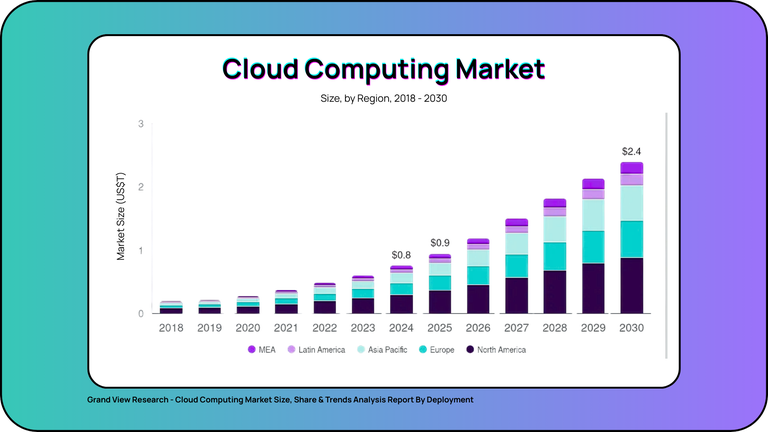
Local dev environments will become a bottleneck, with IDEs moving deeper into the cloud as collaborative, AI-first workspaces. Edge cases will continue to grow in parallel, but testing, deployment, and monitoring will increasingly be handled by intelligent, cloud-based AI systems.
As infrastructure evolves, the centre of gravity will shift from new AI tools to new AI responsibilities. And those responsibilities will be cloud-enabled.
How to prepare:
- Transition Core Workflows - Shift daily dev into cloud IDEs/remote containers; use prebuilt, ephemeral environments to kill setup drift.
- Design Cloud CI/CD for AI - Make AI test-gen, code scanning, and quality checks first-class stages in your cloud pipelines (managed runners, cloud secrets).
- Codify Cloud-Native Ops - Enforce IaC and policy-as-code, with cost limits and environment quotas, so scale stays controllable.
Change #2: Rise of Specialized AI Roles
AI is changing your company's org chart.
Analysts predict that over 100 million people will work with 'robocolleagues' by 2026. As your colleagues change, so will your responsibilities within your team.
Here's what we know for sure: The fastest coders won’t define the future.
The spotlight is shifting from generalist coders to AI-augmented specialists.
Think large language models (LLM) integration pros orchestrating teams of agents, policy-literate engineers evolving into governance experts, and new orchestration roles that blur the line between engineer and AI manager.
This is the logical evolution.
As AI swallows repetitive tasks, engineers are stripping down their roles to first principles - defining what the system should do, where AI adds leverage, and where humans must specialize to ensure software solutions that deliver.
The 2026 change? Software engineering fractures into specialized AI roles, where success depends less on syntax and coding speed, and more on how you architect, direct, and govern intelligent AI collaborators.
How to prepare:
- Strip Back to First Principles - Audit your role to Human/AI/Hybrid tasks and publish a RACI that explicitly includes agents/tools.
- Formalize Specializations - Establish emerging roles like LLM integration, agent operations, and AI governance as named specializations with competencies/KPIs.
- Pilot AI Ownership - Introduce an 'AI manager' on-call with runbooks and SLAs for agent systems to normalize the role early.
Change #3: Shift in Engineer Skillset
New roles demand new skills.
Analysts expect that within the next few years, about 80% of engineers will need to upskill as generative AI reshapes their field. But not all skills are the same.
Recent NACE Center research found that employers rate communication, critical thinking, and teamwork at over 90% importance.
That doesn't mean technical expertise no longer matters. But it does mean that as AI develops, human-centric thinking skills will take their rightful place on center stage.
Just take the lived experience of Manuel da Silva - AI-Driven Customer Support Architect at Trilogy. Here's what he had to say about what's truly valuable in the AI workplace:
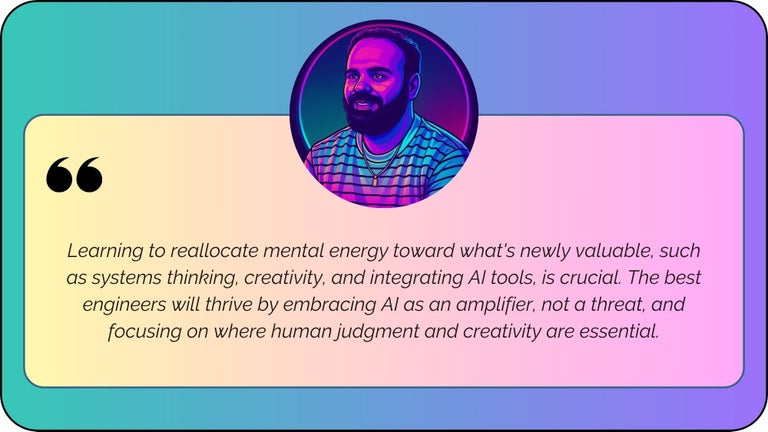
As AI collaborators handle more of the traditional engineering workload, the top AI-augmented engineers will double down on the skills Manuel highlights - systems thinking, creativity, AI integration. The human skills that let them guide their AI counterparts effectively.
This is the evolution from executor to orchestrator.
How to prepare:
- Double-Down on Thinking Skills - Invest in human differentiators - skills like creativity and problem solving - that direct AI execution. These are the human abilities AI can’t replicate, but make AI collaboration effective.
- Master AI Integration - Not every AI tool fits everywhere. Train yourself to evaluate AI integrations and adjust implementation for maximum impact. Never fall on 'AI for AI’s sake.'
- Own Communication - If you can’t clearly explain what the AI did and why, you’re not in control. Treat communication as the ultimate proof of ownership.
Learn how Manuel more than 5Xed his career with Crossover.
Change #4: AI-Assisted to AI Orchestration
AI is already shaping developer output.
Around two-thirds of engineers say at least a quarter of every commit is AI-influenced. And 15% report more than 80% of their code is now touched by AI in some way.
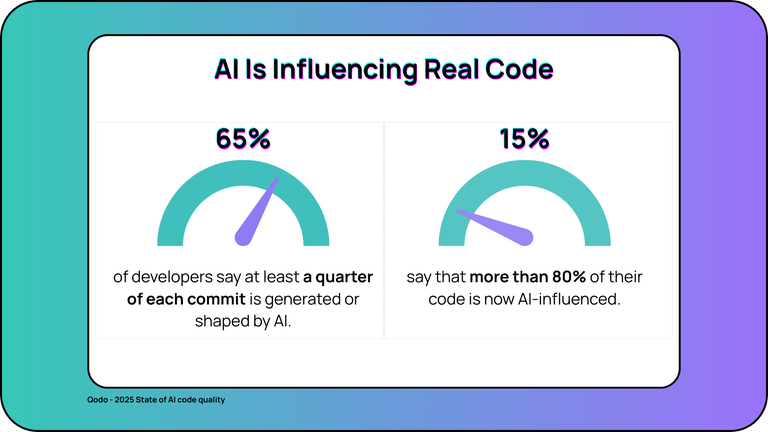
Big progress. But still mostly surface-level.
By 2026, AI software engineering won’t end at basic autocomplete. AI tools will mature into genuine thinking and coding partners - able to look across code bases, propose multi-file changes, design features with accompanying unit tests, and catch issues earlier in your pipelines.
Smart engineers are already adjusting. Just take Trilogy AI Innovation Specialist Chintan Parekh:
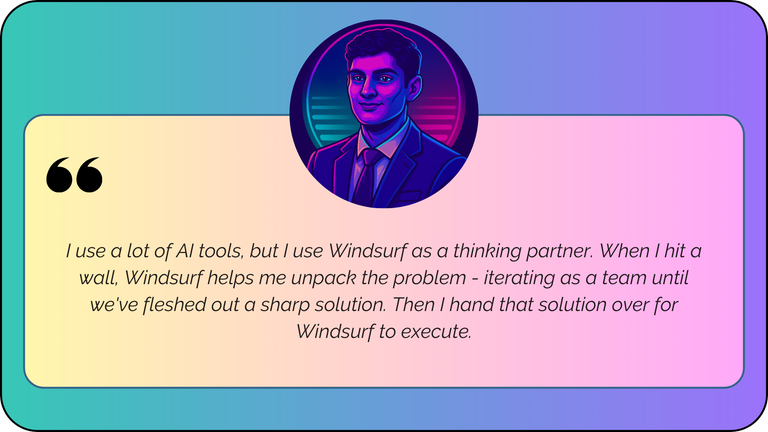
See what's happening?
Chintan has moved past basic coding, applying thinking skills - like Manuel - to orchestrate an emerging AI partnership. This represents the inevitable leap from basic AI-powered autocomplete to true AI collaboration.
How to prepare:
- Develop AI Reviews - Build a simple, repeatable quality check (logic correctness, security, performance, tests) that can be applied to AI-influenced changes. Make it scalable now so it doesn’t break when AI usage jumps in 2026.
- Direct, Don’t Accept - Push AI for structured plans (architecture, test outlines, naming conventions) before it codes. Orchestration means steering, not rubber-stamping.
- Automate Guardrails - Add CI/CD gates for test coverage and edge cases. Help automation enforce your bar so orchestration scales.
Change #5: AI-Specific Cybersecurity & Governance
AI is expanding your attack surface.
Spending on AI governance is set to grow at about 50% a year over the next decade. And with threats like prompt injection, model poisoning, data leakage, and jailbreaks, it's really no surprise why.
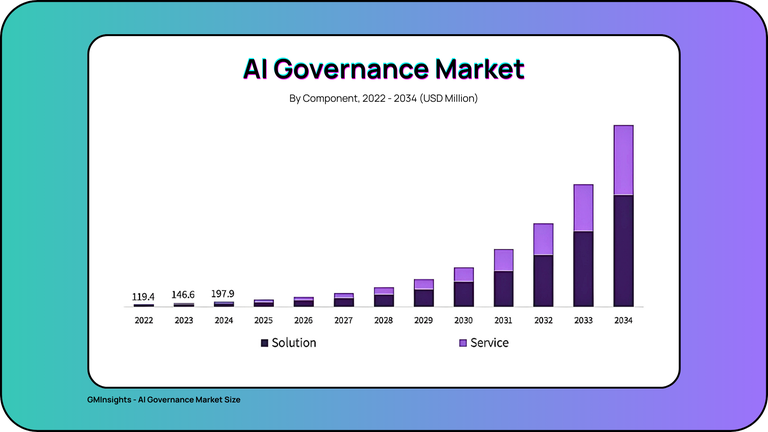
Your current security stack handles code vulnerabilities and infrastructure threats. But it was never designed for poisoned training data or adversarial prompts.
In 2026, 'secure' won't just mean secure code. It means secure models, clean training data, controlled tool access, monitored prompts, and auditable outputs. Security reviews HAVE to evolve from 'does the app pass tests?' to 'does the AI system behave safely end-to-end?'
All the specialization, skills, and orchestration in the world mean nothing if your systems aren’t safe. AI only amplifies when implemented responsibly.
How to prepare:
- Threat-Model Your AI Stack - Map every AI component (prompts, tools, connectors, datasets), identify AI-specific attack vectors, and run adversarial evaluations before release. Treat this as pen-testing for the AI era.
- Build Guardrails & Provenance - Add protective controls (input/output filters, data minimization) and track dataset lineage and model versions so you always know who learned what from where.
- Make Governance Part of CI/CD - Encode safety policies as pipeline gates: eval thresholds, red-team checks, and PII scans. Log prompts and outputs, monitor for drift, and keep a human in the loop for high-stakes actions.
Get Ahead of AI Software Engineering in 2026
AI software engineering rewards those who prepare.
And in 2026, that preparation begins with 5 changes:
- AI tools move deeper into the cloud
- AI roles specialize
- Human skills hit center stage
- Automation moves to orchestration
- Security and governance get an AI update
The engineers already preparing for these changes will design how teams work in 2026. The ones who wait will spend 2027 playing catch-up.
Start with infrastructure - test cloud-native AI tools and build your guiding principles for the inevitable cloud uptick. Then double down on your human skills: specialize, upskill, and master true AI orchestration. Last but not least, lock your safety protocols down.
The window for competitive advantage is closing. So start preparing for 2026's changes now.
The future of AI software engineering belongs to engineers who think strategically, outsource routine code generation, communicate clearly, and orchestrate intelligently. Master AI-augmented software engineering today to dominate in 2026.
Similar post



Want to read more?
We have a lot more where that came from



 AI-first remote workers.